Off-portal documents
Colin's email/fax cases took longer to locate. A source inventory addresses the hunt; integration quality still needs validation.
Marsh & Colby / Evidence-led workflow design
Keep the familiar checklist. Make documents easier to find, discrepancies easier to resolve, and human review explicit.
Zhihan Liu · Ajaia Digital Product Designer assessment
Where the recorded effort sits
LC1 · Colin, 54 submissions, last 30 days.
These are two workflow-stage averages, not total binding time or a measured saving.
Colin's email/fax cases took longer to locate. A source inventory addresses the hunt; integration quality still needs validation.
Anika's record includes nine waits over four days. Reply sample size is unknown. Clear requests may reduce rework, not all external waiting.
Separate counts for Anika and Colin. Frequent discrepancies need a safe resolution path; frequency does not establish checking time.
User journey and human checkpoints
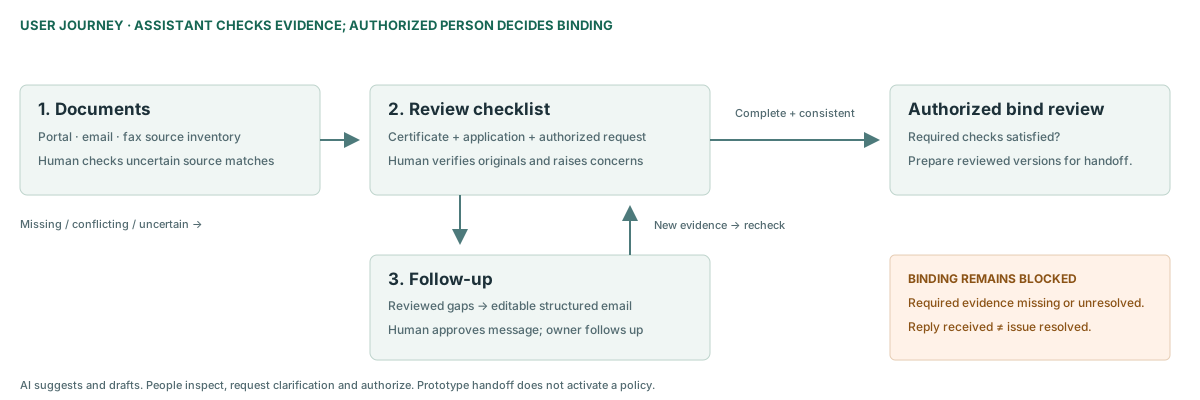
| Screen | Job to be done | Decision that stays human |
|---|---|---|
| 01 · Documents | Locate required originals across portal, email and fax. | Confirm uncertain submission matches and inspect sources. |
| 02 · Review checklist | Check candidate findings against linked originals and the authorized request. | Establish the correct requirement; verify current values. |
| 03 · Follow-up | Turn reviewed gaps into a structured request; check new evidence on reply. | Approve outgoing messages; review corrections before handoff. |
Anika asks for faster checklist entry, but her account and the log point toward mismatch correspondence and waiting. Colin explicitly prioritizes retrieval. This supports a different improvement priority, without inventing a numerical contradiction between the interviews and logs.
All prototype client details, amounts and documents are illustrative fixtures. Research claims come only from the supplied interviews and usage log. No business improvement or real-user test is claimed.